

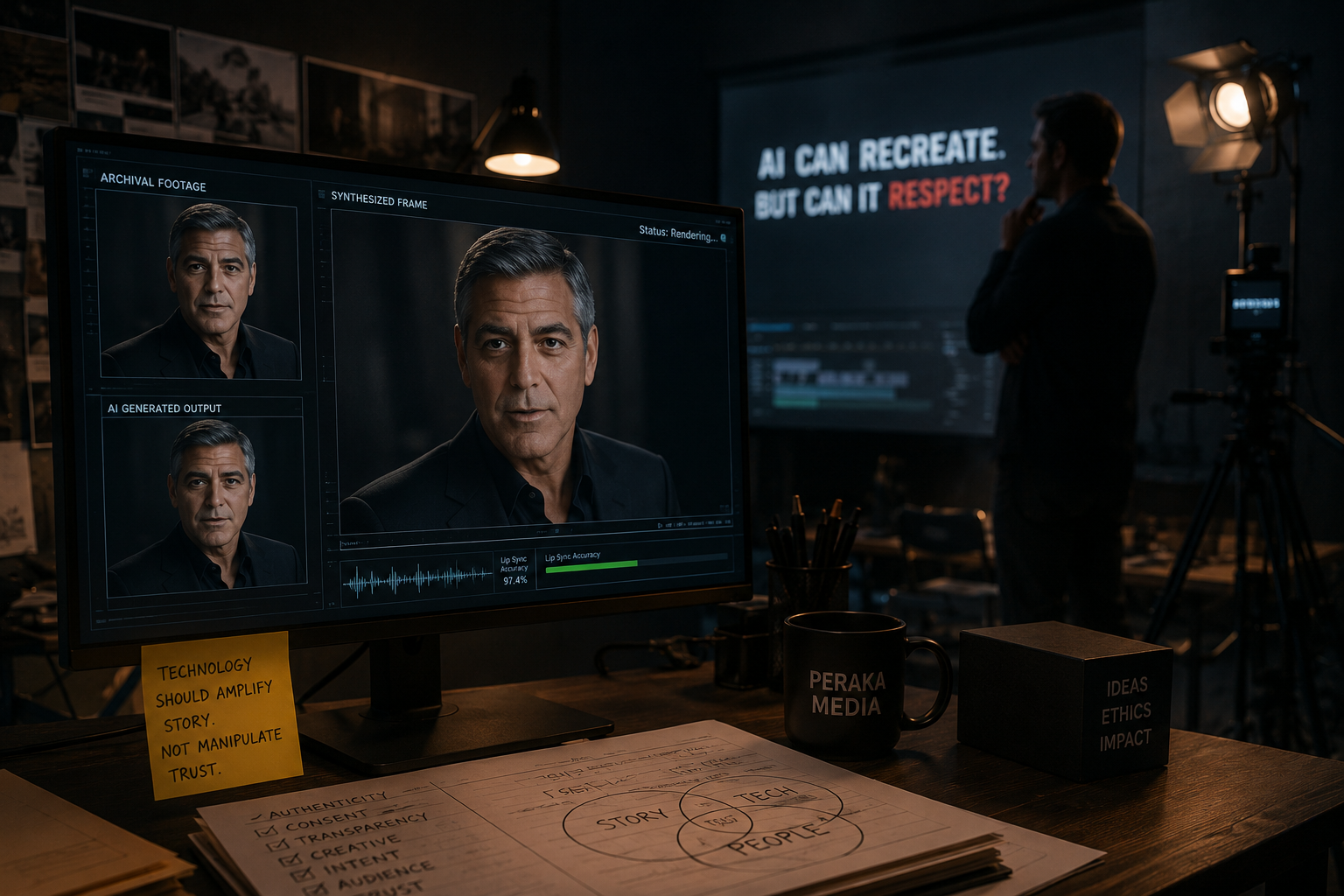
The Deepfake Dilemma: Where Does AI End and Performance Begin?
A few years ago, a globally recognised soft drink brand aired a commercial featuring a digitally recreated version of a deceased music legend. The ad was technically flawless. The likeness was convincing. And the internet had a lot of feelings about it.
That moment quietly marked a turning point in advertising. AI had moved from the editing room into the boardroom, and brands were beginning to realise that the rules around identity, consent, and authenticity were about to get far more complicated.
AI and the Celebrity Endorsement, Reimagined
Celebrity endorsements have always been a cornerstone of advertising. A familiar face builds trust, transfers credibility, and creates emotional shortcuts that copy alone cannot. But hiring a celebrity is expensive, logistically complex, and carries real risk. What if the brand and the person fall out? What if a controversy erupts mid-campaign?
AI now offers brands a tempting alternative. With enough archival footage and a capable model, it is possible to generate a version of a public figure saying almost anything, appearing in almost any setting, and doing so at a fraction of the cost of a traditional shoot. Some brands have already begun exploring an AI-generated brand ambassadors modelled on real people, either with their consent or, in more troubling cases, without it.
This is where advertising walks into ethically complicated territory.
Consent Is Not a Fine Print Issue
When a real person’s face or voice is used in an advertisement without their knowledge, it is not just a legal problem. It is a betrayal of the audience, too. Viewers who see a familiar face endorsing a product assume, reasonably, that the person chose to be there. That assumption is the foundation of why endorsements work at all.
Several high-profile cases have already made it to court. Influencers, actors, and even athletes have discovered AI-generated versions of themselves promoting products they never agreed to endorse, selling audiences on a relationship that never existed.
As a creative agency in Kochi that builds brand stories for real audiences, Peraka Media believes that the most powerful advertising has always been rooted in genuine connection. Manufactured trust is not trust. It is a liability dressed up as a shortcut.
De-Ageing, Digital Doubles and Brand Storytelling
Not all AI likeness work in advertising is ethically murky. Many brands have used de-ageing technology beautifully, bringing back a founder’s younger self to mark an anniversary, or recreating a historical figure for an educational campaign with full transparency about what audiences are seeing.
When used with consent, proper disclosure, and creative intention, these tools can produce advertising that is genuinely moving and memorable. The technology is not the problem. The absence of honesty around it is.
What Brands Should Be Asking Right Now
Every brand working with AI-generated likenesses, whether of celebrities, employees, or even fictional characters modelled on real people, should be asking a few clear questions. Has the person consented in writing and with full understanding of how their likeness will be used? Will the audience know they are watching something AI-generated? Does this serve the story the brand wants to tell, or is it just a cost-cutting measure dressed up as innovation?
These are not just ethical questions. They are strategic ones. Audiences today are increasingly sharp. When they feel misled, they do not just leave. They talk about it.
The Bigger Picture
Advertising has always shaped culture, and culture has always shaped advertising. AI is accelerating that relationship in ways the industry is still learning to navigate. The brands that will earn lasting loyalty are those that use these tools with transparency, creativity, and genuine respect for the people they are speaking to.
The deepfake dilemma is not really about technology. It is about what kind of relationship a brand wants to have with the world.